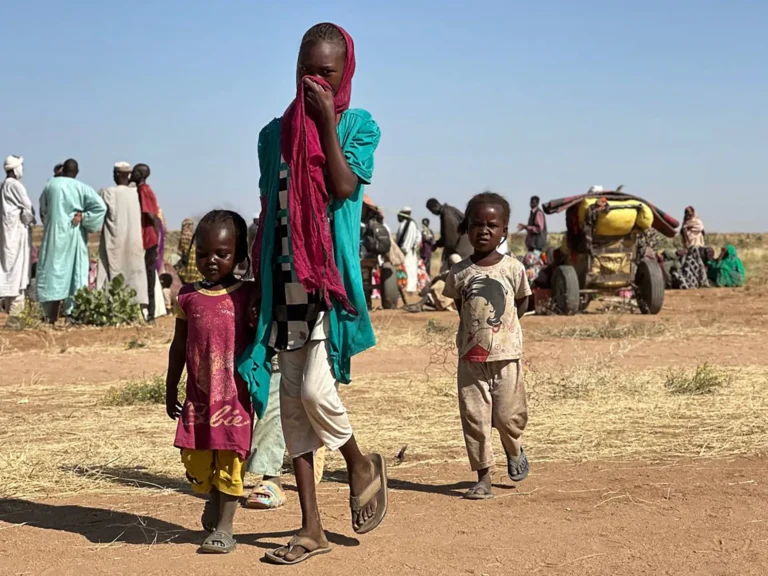
Hawa arrived at a refugee camp in Tawila, a town roughly 35 miles west of El Fasher in Sudan’s Darfur region, on October 20 — exhausted, traumatized, and separated from her 16-year-old son.
“We walked for days on rough terrain, our feet scorched,” she recounted in testimony shared with reporters by the U.S.-based activist network Avaaz. “When they carried out executions, that was the first time I saw someone slaughtered in front of me. It was traumatizing.”
Hawa is one of thousands who have fled El Fasher, the capital of North Darfur, since the Rapid Support Forces (RSF) — a powerful Sudanese paramilitary group — captured the city last month.
Once the final stronghold in the wider western Darfur region, El Fasher had endured more than 18 months of siege before falling to the RSF. Since then, reports of atrocities have emerged, including mass executions, sexual violence, and disappearances, though a communications blackout has made independent verification nearly impossible.
Before escaping, Hawa said women and children were detained separately and routinely abused. “They took young girls from us as a form of currency,” she said, describing scenes of terror where those who fell asleep were beaten.
According to the Norwegian Refugee Council (NRC), the Tawila camp now shelters an estimated 500,000 displaced people, the majority fleeing from El Fasher. Yet only around 6,000 refugees have reached the camp since the city fell — leaving tens of thousands unaccounted for.
Humanitarian observers and families said they fear many of those missing may be held captive or killed by RSF fighters as the group consolidates control across Darfur.
Aid organizations warn that conditions at the camp are rapidly deteriorating, with food, medicine, and shelter in short supply. “What we’re seeing in Tawila is just a glimpse of a much larger humanitarian catastrophe,” one relief worker said.