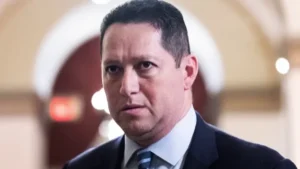
Shi Yongxin, the influential and often controversial abbot of China’s renowned Shaolin Temple, is under official investigation for alleged embezzlement, sexual misconduct, and fathering illegitimate children, the temple confirmed on Sunday.
The probe, led by several Chinese government agencies, has sent shockwaves through the 1,500-year-old temple in Henan province, regarded as the birthplace of both Zen Buddhism and Shaolin kung fu.
On Monday, China’s Buddhist Association announced that Shi Yongxin has been stripped of his ordination certificate—an official document that marks one’s status as a Buddhist monk—citing mounting evidence of serious ethical breaches.
“Shi Yongxin’s actions are extremely harmful and have severely damaged the reputation of the Buddhist community,” the association stated.
The allegations, which include misuse of temple funds and inappropriate relationships with multiple women, have ignited widespread public interest. By Monday morning, the scandal had become the most-read topic on Weibo, China’s top social media platform. Shi’s own verified account, once followed by over 880,000 users for spiritual reflections, has been silent since July 24.
This is not Shi’s first brush with controversy. In 2015, he faced similar accusations, including accepting extravagant gifts like a luxury SUV and gold-threaded robes. Though he was cleared at the time, critics questioned the transparency of the investigation.
Known internationally as the “CEO monk,” Shi Yongxin has led the temple since 1999 and has been widely credited—and criticized—for turning Shaolin into a global brand. Under his leadership, the temple launched kung fu schools abroad, staged international martial arts performances, and unveiled ambitious commercial projects, including a proposed $300 million complex featuring a hotel, kung fu academy, and golf course.
While the Shaolin Temple has long been embedded in global pop culture—from Jet Li’s iconic 1982 film to references in hip-hop and video games—the current scandal has raised concerns about the commercialization of sacred institutions.
As investigations continue, calls are growing for stricter oversight of religious leaders in China. Whether Shi Yongxin will face formal charges remains uncertain, but the fallout has already cast a shadow over the spiritual and cultural legacy of the Shaolin Temple.