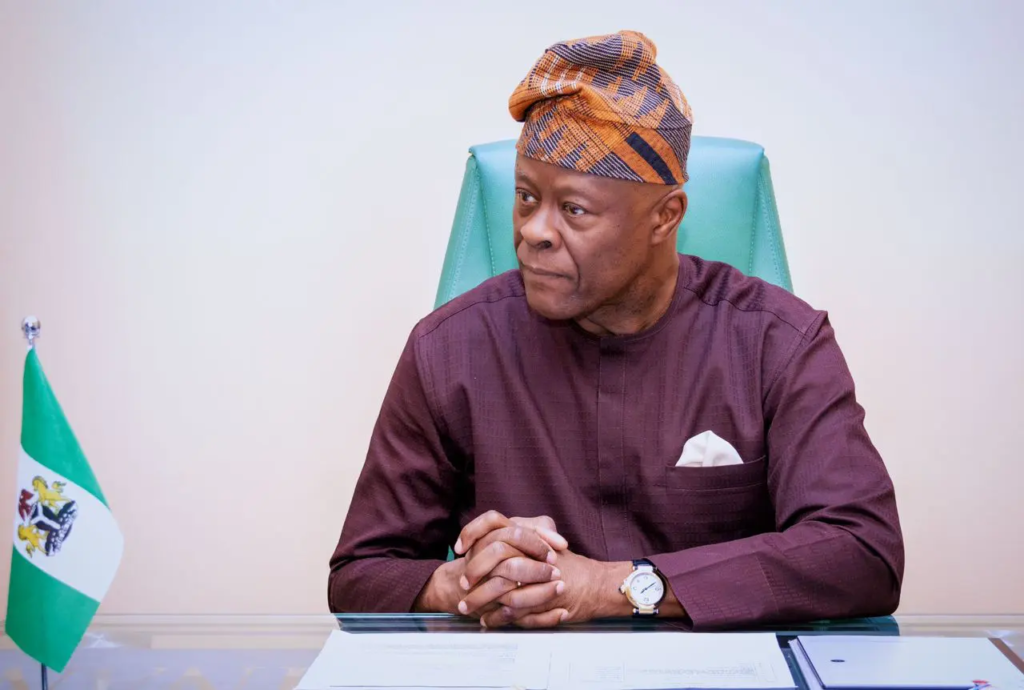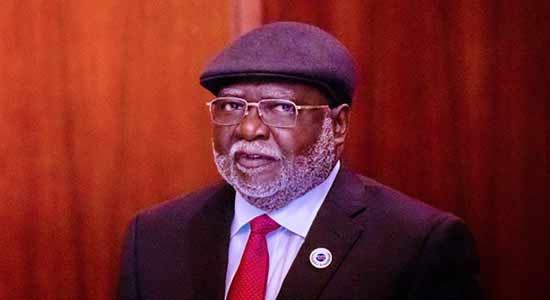
Following Justice Mohammed Tanko’s retirement as the previous Chief Justice of Nigeria, President Muhammadu Buhari nominated Ariwoola to the Senate for confirmation in July.
Following a Committee of the Whole screening, his nomination was approved on Wednesday.
Ariwoola denied there was any tension between his predecessor and other Supreme Court Justices during the screening over their leaked document written to the former Chief Justice of Nigeria.
He identified some of the challenges facing the judiciary including lack of accommodation for some Justices of the apex court, inadequate funding and inadequate manpower.
He regretted that only 13 justices are currently doing the work meant for 21 justices.
He said, “We are supposed to be 21 justices but we are 13. We just discovered on Monday, when we started sitting, that 12 appeals were listed for justices to deal with.
“So in three days, you can imagine how many appeals we will take. And how do we write these judgments? We need to appoint more justices. As we said, the rules will have to be amended.
“Many cases should not be allowed to come up to the Supreme Court. Many cases should be allowed to stop at the Appeal Court. It is only by constitutional amendment that that can happen.”
Meanwhile Prof. Ernest Ojukwu (SAN), a former Deputy Director-General and Head of Campus of the Nigerian Law School, remarked that Ariwoola inherited a court that had mostly failed in its constructive policy-making role in an interview with The PUNCH.
He claimed that the CJN would inherit and be required to deal with issues such as an apex court that is setting the standard for slow justice, severe case backlogs, the elevation of technical justice over substantive justice, widespread mistrust and disregard for its political decisions, and conflicting judgments.
“The Chief Justice is inheriting a court that has largely failed in its positive policy-making role and more bogged down by somewhat not so progressive decisions.
The Chief Justice is inheriting quasi Judiciary agencies like the National Judicial Council and Judicial Service Commission that have woefully failed at giving Nigeria the greater numbers of best, most intelligent and less corrupt judges. The greatest challenge facing our justice administration today is the calibre and ethical standards of our judicial officers, especially at the lower court levels.
“The Chief Justice will be inheriting colleagues at the Supreme Court and across the country who are disillusioned in their jobs and unmotivated by the terrible emoluments being paid to them by a country that is uncaring about judges’ welfare.
“The Chief Justice will be inheriting a largely executive dependent judiciary where the governors have neglected constitutional provisions, judicial decisions and Executive Order of the President that insists on the financial autonomy of courts. The Chief Justice will be inheriting a legal system that is failing and trust in the administration of justice collapsing,” Ojukwu said.
In a separate interview, Prof. Sam Erugo (SAN) urged Ariwoola to use his extensive knowledge to improve the judiciary.
Given his history and the institutional hurdles that followed his appointment and confirmation, we expect that he would tackle the issues that his colleagues had pointed out right away.
“There is no doubt that he will bring positive changes to the Supreme Court,” Erugo stated.