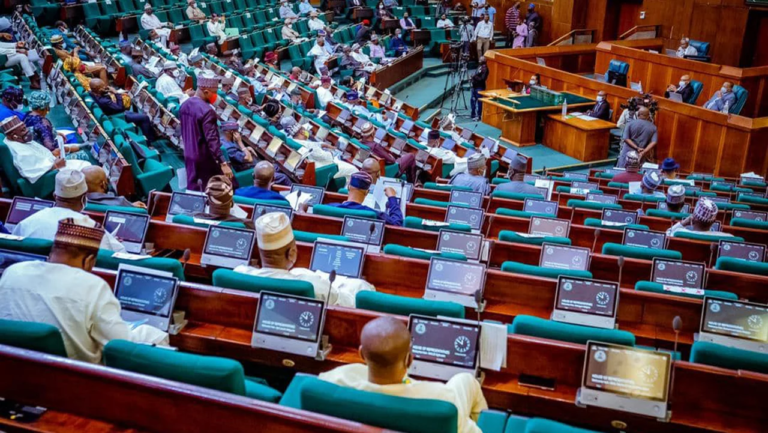
The House of Representatives has challenged Ibrahim Usman Auyo, member representing Hadejia/Auyo/Kafin Hausa federal constituency of Jigawa State, to provide evidence for his claims that lawmakers pay to present motions, bills, and petitions.
Auyo, an All Progressives Congress (APC) lawmaker first elected in 2015, had told his constituents that legislators allegedly pay between ₦1 million and ₦3 million to bring matters before the green chamber.
“Since I was elected as a member in 2015, no individual has given me a bill to pass, either from Auyo, Hadejia, or Kafin Hausa. They are just pretending,” he said, while defending his limited record of sponsoring bills and motions.
“And also, even the bills and petitions are paid for. You have to pay from ₦3 million, ₦2 million, or ₦1 million to present it. And after you present the bill, you must follow up by lobbying the whole 360 members of the house to accept the bill,” he added.
Reacting in a statement on Friday, House spokesperson Akin Rotimi described the allegations as unsubstantiated and warned they could undermine public confidence in the National Assembly.
“The House of Representatives has taken note of a viral video in which Rep. Ibrahim Usman Auyo alleged that Members of the House receive payments to sponsor Motions, Bills, and Petitions,” the statement read.
“These allegations are unsubstantiated and, if left unclarified, risk undermining public confidence in the National Assembly. Statements of this nature must be backed by verifiable facts and presented through the appropriate parliamentary channels.”
Rotimi maintained that the legislature operates through transparent and constitutional procedures, insisting the suggestion that sponsoring motions or bills is a “contract job” involving bribes was false.
He added that once the House reconvenes, Auyo would be invited to provide evidence. Should he fail to do so, the matter will be referred to the Committee on Ethics and Privileges for further action.
According to Rotimi, the House remains committed to upholding parliamentary integrity and fostering mutual respect among members.