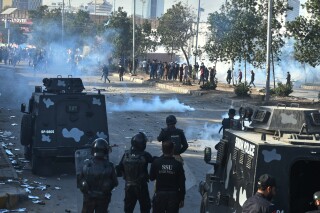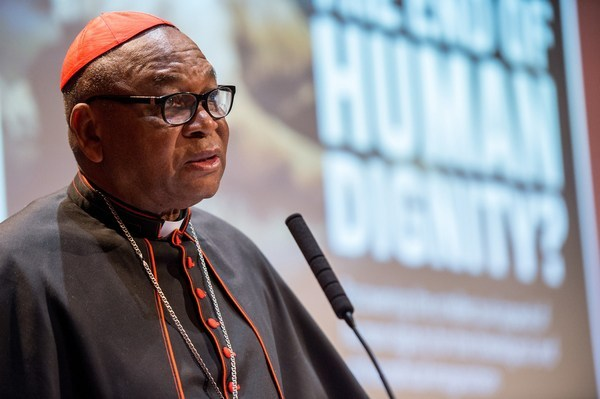
Catholic Cardinal John Onaiyekan has urged the Federal Government to reconsider its plan to deploy 20,000 additional police officers, insisting that Nigeria should instead properly equip and support the officers already in service to tackle insecurity more effectively.
His remarks follow President Bola Tinubu’s recent announcement of plans to recruit 20,000 new police personnel.
Speaking on Thursday at the 9th International Conference on Love and Tolerance in Abuja, Cardinal Onaiyekan warned that Nigeria cannot afford delays in confronting escalating security threats.
“Right now in Nigeria, we have to build bridges so that all of us, Christians and Muslims, can jointly face our common enemy… Those who are killing us. We have finally agreed that we shall join hands and face them. And if we join hands, we can deal with them now. We should be able to deal with them,” he said.
“With all these wonderful soldiers and police, we should be able to deal with them. I’m not even sure we need 20,000 more policemen. I believe they are the ones we have right now. Arm them well, treat them well, and they will do their job.”
Questioning the practicality of the government’s plan, the Cardinal expressed concern about the timeline required to train and deploy such a large number of new officers in what he described as an emergency situation.
“There is no need to deploy 20,000 policemen. We could use the policemen we have,” he said. “I’m not an expert, but to train them and then deploy them, for an emergency… how long does it take to deploy 20,000 people? I guess we are talking of one year. In one month, this country can be destroyed.”
He added that existing officers must be properly equipped and moved away from non-essential assignments.
“We should equip the policemen we have now, who are already trained though, but they are carrying bags for madams. It’s good that they have been withdrawn; let them start working.
“And let there be the political will to flush the terrorists out of the forest. And we are glad about the language that our president spoke yesterday; but we’ve been listening to that since two years ago. What do you have police for? That’s their job. It’s not even the job of the army. It’s the job of the police.”
Earlier in his address, Cardinal Onaiyekan reflected on global religious harmony, warning that Nigeria faces rising internal polarisation despite international efforts toward unity. He referenced the “Abu Dhabi document” signed by Pope Francis and the Grand Imam of Al Azhar as a model for peaceful coexistence.
Former Kaduna Central Senator Shehu Sani also spoke at the event, identifying the root causes of intolerance. He noted that differences in wealth, power, race, and religion often fuel dominance and resistance, stressing that peace begins with recognising and accepting human diversity.
Sani further warned that shrinking freedom of speech through arrests and heightened social media scrutiny threatens open dialogue. He said love, understanding, and respect for differing views remain essential for fostering a harmonious society.
President of UFUK Dialogue Foundation, Emrah Ilgen, said the international conference was convened to address the urgent need for healing in a deeply divided world. He explained that the theme, “Bridging Divides: Building Trust in a Polarized World,” was chosen to tackle growing tensions driven by mistrust, misinformation, fear, ethnic divisions, and religious misconceptions.
For over a decade, he added, UFUK Dialogue has worked to build bridges between communities and promote dialogue rooted in compassion and understanding.
“Humanity is strongest when it chooses dialogue over suspicion, compassion over conflict, and understanding over prejudice,” he said.
In his welcome address, Director General of the Institute for Peace and Conflict Resolution, Dr. Joseph Ochogwu—represented by Dr. Emmanuel Mamman said Nigeria is grappling with deepening mistrust, widening identity divides, and rising misinformation. He stressed that rebuilding trust requires fairness, sustained dialogue, and the inclusion of women and youths.
“Polarization is not destiny. Mistrust, though deep, remains reversible,” he said.
He added that traditional and religious institutions remain central to social cohesion, and that collaboration with groups such as UFUK Dialogue is essential for restoring national harmony.