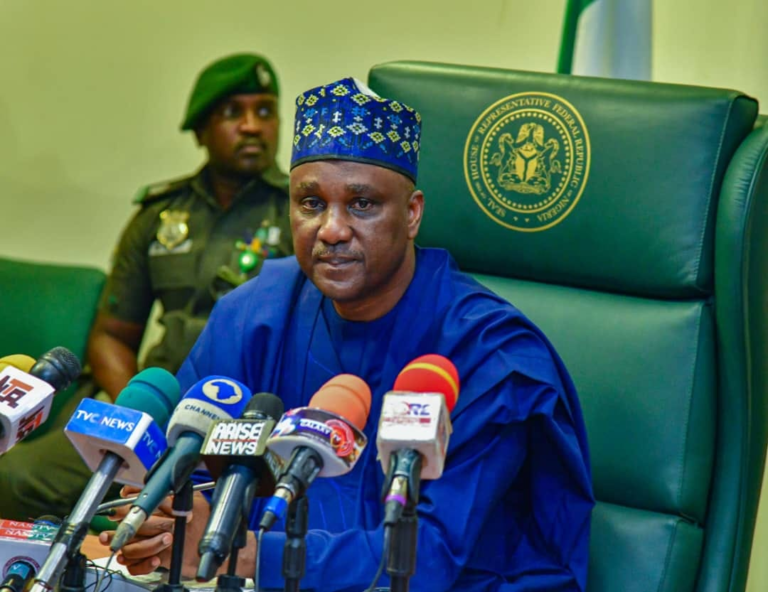
Speaker of the House of Representatives, Abbas Tajudeen, has raised alarm that Nigeria’s debt burden has reached a “critical point,” breaching constitutional limits and posing a serious threat to fiscal sustainability.
Abbas made the warning on Monday while declaring open the 11th Annual Conference and General Assembly of the West Africa Association of Public Accounts Committees (WAAPAC) in Abuja.
He revealed that Nigeria’s total public debt rose to ₦149.39 trillion (about US$97 billion) in the first quarter of 2025, up from ₦121.7 trillion in 2024. With the debt-to-GDP ratio now at 52 percent well above the 40 percent legal ceiling the Speaker cautioned that urgent reforms were needed.
“This is a signal of strain on fiscal sustainability,” Abbas said, urging transparent borrowing, stronger parliamentary oversight, and reforms to ensure that loans deliver measurable social and economic benefits.
Warning that Nigeria risked following other African nations already spending more on debt servicing than on healthcare and essential services, Abbas described the trend as “a structural crisis that demands urgent parliamentary attention and coordinated reform.”
To address the challenge, Abbas announced Nigeria’s plan to lead the creation of a West African Parliamentary Debt Oversight Framework under WAAPAC. The initiative will harmonise debt reporting across the region, improve transparency, and provide lawmakers with data to scrutinise borrowing practices.
He also unveiled proposals for a regional capacity-building programme to equip Finance and Public Accounts Committees with expertise in debt sustainability analysis and fiscal risk management.
While stressing that borrowing should focus on infrastructure development, Abbas warned against reckless loans used to finance consumption or lost to corruption.
“Oversight is not just about figures, but about the lives and futures behind those figures,” he said.
Reaffirming the 10th House of Representatives’ commitment to accountability, Abbas pledged that all major borrowing requests would undergo public hearings. He added that simplified debt reports would be published for citizens under the legislature’s Open Parliament policy.
The WAAPAC conference, themed “Strengthening Parliamentary Oversight of Public Debt: The Role of Finance and Public Accounts Committees,” brought together lawmakers from across West Africa, development partners, and financial experts.
His warning comes just days after President Bola Tinubu, currently on leave, announced that the Federal Government would halt borrowing from domestic banks following what he described as a significant revenue boost from non-oil sectors. Tinubu said Nigeria had already met its 2025 revenue target by August.