Nepal’s military resumed negotiations on Thursday with leaders of the “Gen Z” protest movement to select a caretaker prime minister, following a wave of violent demonstrations that left at least 30 people dead and led to the resignation of Prime Minister K.P. Sharma Oli.
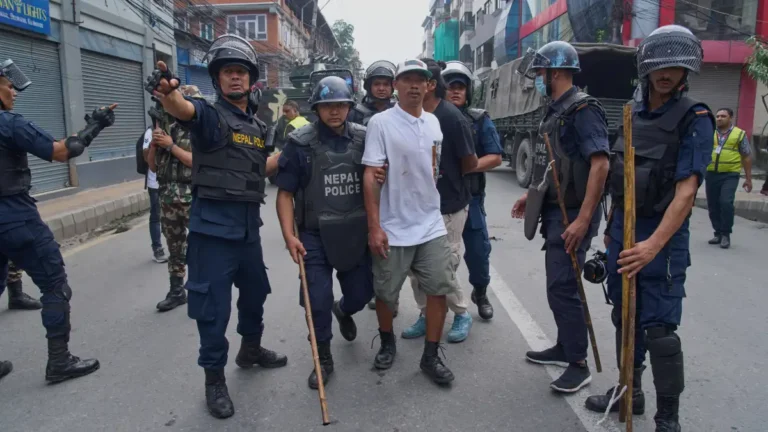
Tensions remain high in Kathmandu, with soldiers deployed across the capital amid a fragile calm. The unrest — the most severe in decades — erupted after the government imposed a ban on major social media platforms. That ban, which was reversed earlier this week, triggered a youth-led uprising that escalated into deadly clashes with police. Nineteen protesters were killed when authorities opened fire using rubber bullets and tear gas.
Emerging as a unifying figure among protest leaders is former Chief Justice Sushila Karki, who made history as Nepal’s first female chief justice in 2016. Widely respected for her integrity and independence, Karki is being considered to lead a transitional government.
“We see Sushila Karki for who she truly is — honest, fearless, and unshaken,” said Sujit Kumar Jha, a 34-year-old demonstrator. “She’s the right choice. When truth speaks, it sounds like Karki.”
At 73, Karki is said to have expressed willingness to take on the role, though constitutional experts are still determining how to formalize her appointment within Nepal’s legal framework. While most protest leaders back her nomination, some factions are still in deliberation to build full consensus. Karki has not issued a public statement.
Army spokesperson Raja Ram Basnet confirmed that dialogue was ongoing:
“Initial talks are on and would continue today. We are trying to normalise the situation slowly.”
Despite the deployment of troops, Kathmandu remained largely shut down on Thursday. Schools, shops, and colleges remained closed, though some essential services resumed under heavy security. Prohibitory orders remain in effect, although flights at Tribhuvan International Airport continued without disruption.
According to the Ministry of Health, more than 1,000 people have been injured in the clashes. The protests have been driven by widespread youth frustration over corruption, unemployment, and economic stagnation. The anger has spilled into targeted attacks on government institutions and high-profile properties, including the private residence of former Prime Minister Oli.
Businesses were not spared either, with hotels in the tourist hub of Pokhara and the Hilton in Kathmandu reportedly set ablaze.
As Nepal’s political vacuum deepens, many hope that the selection of an interim leader can help restore calm and pave the way for long-overdue reform.