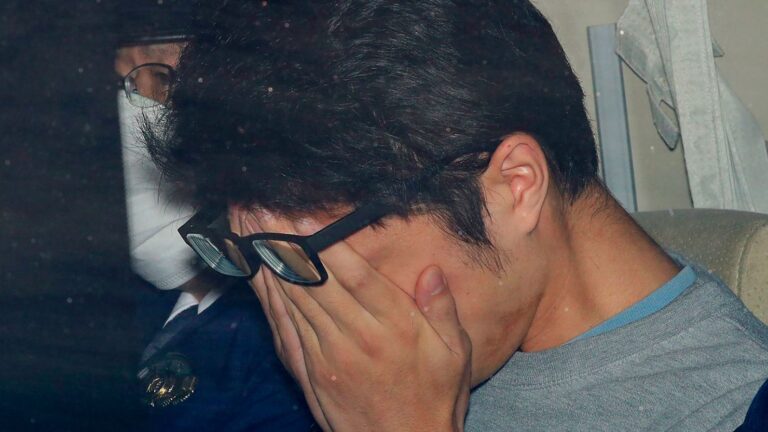
Japan carried out its first execution in nearly three years on Friday, hanging Takahiro Shiraishi — notoriously known as the “Twitter Killer” — for the gruesome murder of nine people in 2017. The 33-year-old was convicted of luring eight women and one man through social media, before strangling and dismembering them at his apartment in Zama, a city southwest of Tokyo.
This marks the country’s first execution under Prime Minister Shigeru Ishiba’s administration, which came to power in October. It is also the first death sentence Japan has enforced since July 2022.
Justice Minister Keisuke Suzuki, who signed the execution order, described Shiraishi’s actions as “vile and extremely selfish,” adding that the killings caused widespread fear and unease. He said the decision to proceed with the execution followed a “careful and comprehensive” examination of the case.
Shiraishi gained infamy for exploiting Twitter to contact individuals grappling with suicidal thoughts. Posing as someone who could help them die painlessly — or even join them in death — he instead murdered them upon arrival at his residence.
Japan’s use of the death penalty, conducted by hanging and often without advance notice, has long drawn criticism from human rights organizations. Death row inmates are typically informed of their execution only a few hours before it is carried out, a practice condemned as inhumane.
In a press briefing, Suzuki defended the policy, arguing that capital punishment remains necessary in the face of such violent crimes. “Abolishing the death penalty would not be appropriate at this time,” he said, noting that 105 prisoners currently remain on death row.
Shiraishi’s execution follows the 2022 hanging of the perpetrator behind a deadly 2008 stabbing spree in Tokyo’s Akihabara district. It also comes less than a year after the dramatic acquittal of Iwao Hakamada, the world’s longest-serving death row inmate, whose conviction for a 1966 murder was overturned after decades of legal battles.
The execution has reignited debate within Japan and abroad over its continued use of capital punishment — a practice now rare among developed nations.