India will reopen its embassy in Kabul, nearly four years after shuttering it in the wake of the Taliban’s return to power, Foreign Minister Subrahmanyam Jaishankar announced Friday. The move marks a major diplomatic shift, as New Delhi deepens its engagement with Afghanistan under Taliban rule.
The embassy was closed in August 2021 following the swift takeover of Kabul by Taliban forces after the U.S.-led NATO withdrawal. In 2022, India re-established a limited “technical mission” in the capital, focused on trade, humanitarian aid, and medical assistance. That mission will now be upgraded to a full-fledged embassy, though a specific timeline for the transition was not provided.
Landmark Announcement During Taliban Leader’s India Visit
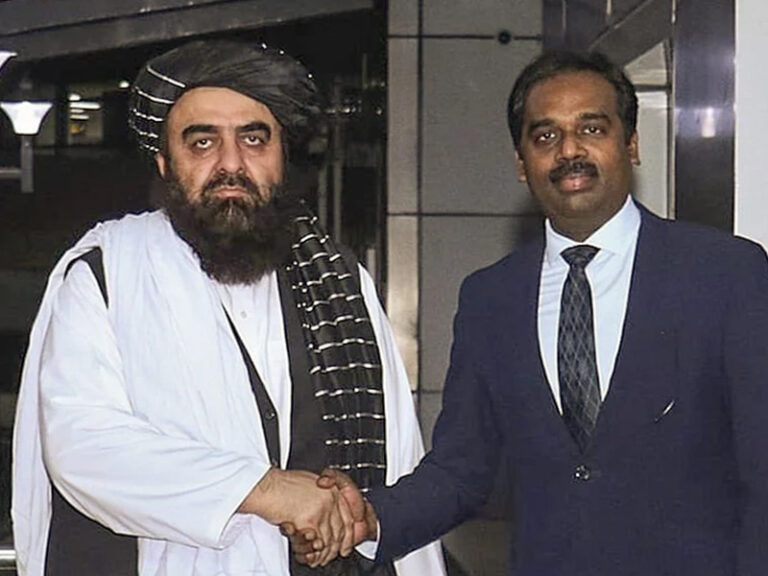
Jaishankar made the announcement during a high-level meeting with Taliban Foreign Minister Amir Khan Muttaqi, who is on a six-day visit to India — the first official visit by a senior Taliban leader since the group returned to power. The visit was facilitated by a temporary exemption from UN travel restrictions.
“India is fully committed to the sovereignty, territorial integrity, and independence of Afghanistan,” Jaishankar said in his remarks. “Closer cooperation between us contributes to your national development, as well as regional stability and resilience.”
The meeting signaled an intent to rebuild bilateral ties while steering clear of formal recognition of the Taliban administration.
Strategic and Regional Implications
With this move, India joins a dozen countries — including China, Russia, Iran, Pakistan, and Turkey — that have kept their embassies open in Kabul. Of these, Russia remains the only one to have formally recognized the Taliban government.
Afghan officials say Muttaqi’s visit will center on discussions around trade, regional connectivity, and stalled development initiatives, with a focus on reviving Indian-backed infrastructure and education projects halted since 2021.
Though India has historically supported successive Afghan governments and has invested over $3 billion in reconstruction projects, it has not officially recognized the Taliban regime. Analysts interpret the embassy reopening as a pragmatic step to reassert India’s regional presence and safeguard its strategic interests amid ongoing instability and great power competition.
Diplomatic Calculus and Future Outlook
India’s diplomatic return to Kabul is seen as a bid to counterbalance the growing influence of Pakistan and China in Afghanistan, while also ensuring its own security interests — particularly concerning extremist groups operating in the region.
For the Taliban, the visit and renewed ties with India offer a rare opportunity to secure broader international legitimacy and attract investment amid crippling economic sanctions and political isolation.
While formal recognition remains off the table, both sides appear ready to deepen engagement, driven by mutual strategic and economic interests.