Catastrophic flooding triggered by the remnants of Typhoon Halong has devastated remote communities across western Alaska, displacing thousands and prompting mass evacuations that could continue for several more days, officials said Thursday.
“This is still a very fluid situation; we are in the process of evacuating hundreds of people from the affected towns,” said Michelle Torres, outreach branch chief for the State of Alaska.
Originally forming in the northern Philippine Sea on October 5, Typhoon Halong brought powerful winds and torrential rain as it swept into Alaska’s western coast over the weekend. Between Saturday night and Monday, the storm system inundated dozens of communities, dumping more than six feet of water in some areas and generating wind gusts of 50 to 100 mph.
At least 49 communities were affected, with remote coastal towns such as Kipnuk, located roughly 500 miles southwest of Anchorage, suffering some of the worst damage.
The Alaska National Guard has been leading large-scale rescue and evacuation efforts. According to Jeremy Zidek of the Alaska Division of Homeland Security and Emergency Management, 264 residents were evacuated Thursday, following 211 evacuations Wednesday.
Evacuations are expected to continue “for days,” Zidek said, noting that hundreds more people are likely still stranded. Both local authorities and private charter aircraft are being used to reach isolated areas cut off by floodwaters.
At least one person has been confirmed dead, and two others remain missing, though officials said there is currently no indication that additional victims are unaccounted for.
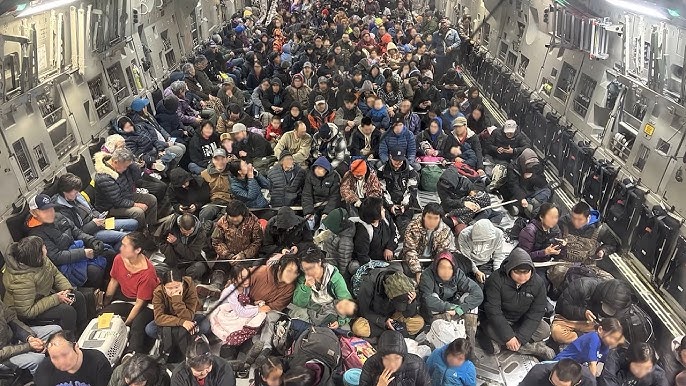
Photos released by the Alaska National Guard show nearly 300 displaced residents sheltering aboard a C-17 transport aircraft.
“Through it all, we stand shoulder to shoulder with our neighbors — evacuating those displaced, flying supplies, and lending a helping hand wherever it’s needed most,” the Guard said in a statement Friday.
The Alaska Community Foundation estimates that at least 2,000 residents from rural areas have been displaced by the floods. Emergency shelters have been established across the region as relief teams deliver food, medical supplies, and fuel to affected communities.
State officials warned that receding floodwaters could expose widespread infrastructure damage, including destroyed homes, washed-out roads, and downed power lines — posing long-term challenges for recovery in one of the most geographically isolated regions of the United States.
As Torres put it, “The scale of this disaster is unlike anything many of these communities have ever seen. The focus now is on saving lives and stabilizing the situation before we can even begin to talk about rebuilding.”