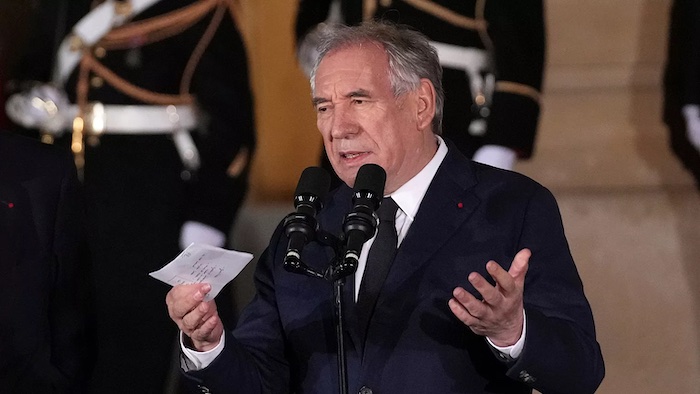
France’s political instability deepened on Monday as Prime Minister François Bayrou—the country’s fourth head of government in just three years—appeared on the brink of losing a crucial confidence vote, further clouding the outlook for the eurozone’s second-largest economy.
The vote, scheduled for Monday afternoon, follows weeks of fraught negotiations and public outreach by Bayrou since his nomination on August 25, amid mounting tensions over France’s fiscal direction and budget shortfalls. Despite his efforts, Bayrou failed to rally a parliamentary majority, with opposition parties from across the spectrum vowing to vote him out.
“The government will fall,” declared Jean-Luc Mélenchon, leader of the hard-left France Unbowed (LFI), echoing the sentiment of a growing bloc of rivals determined to oust the centrist prime minister.
A defeat in the confidence vote would send France’s government into disarray at a moment of heightened geopolitical and economic uncertainty. With Russia’s ongoing war in Ukraine, growing tensions with China and the U.S., and pressure to maintain EU unity, the loss of a stable French government could undermine broader European efforts to project cohesion.
Domestically, the stakes are just as high. France’s fiscal health is under serious scrutiny:
- In 2024, the budget deficit nearly doubled the EU’s 3% ceiling.
- Public debt has surged to 113.9% of GDP.
- Bond spreads have widened—indicating increased investor concern.
- Credit rating downgrades are now considered a real possibility by market analysts.
Should Bayrou fall, President Emmanuel Macron will face the difficult task of selecting yet another prime minister—the second replacement in less than a year—who can win support from a fragmented National Assembly and deliver a viable national budget.
Macron has already ruled out dissolving parliament, a tactic he used last year, leaving him few viable political maneuvers.
Bayrou’s predecessor, Michel Barnier, was ousted earlier this year after clashing with Macron over austerity measures and social spending. Now, Macron must find someone capable of navigating similar challenges—amid growing public disillusionment and opposition unity.
If the confidence vote fails, France could enter a period of technical governance, where ministers serve in caretaker roles until a new cabinet is approved. Such a scenario could stall legislative priorities, delay fiscal reforms, and unsettle markets further.