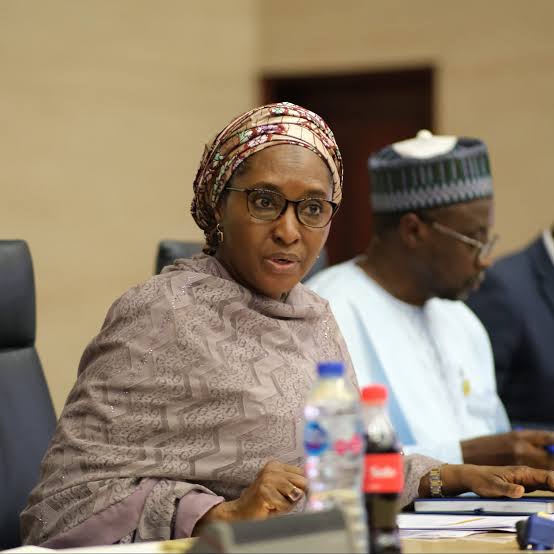
Nigeria’s Federal Government has announced on Friday that its plans to completely remove fuel subsidy by June 2023 is still on course.
Zainab Ahmed, the Minister of Finance, Budget, and National Planning, provided the clarification in a statement through Yunusa Abdullahi, her special adviser on media and communications.
The Minister’s clarification comes in response to earlier, widely circulated reports that quoted Ahmed as saying, after the National Economic Council (NEC) meeting on Thursday, presided over by Vice President Yemi Osinbajo, that the government had shelved earlier plans to remove petrol subsidies in order to consult more widely and give the incoming government time to settle down.
However, the Minister on Friday said the government had no plan to suspend the planned petrol subsidy removal and only wants to expand the subsidy removal committee to include teams from the incoming administration and the state governors.
The Minister submitted that the full subsidy removal by June 2023 is still the target as contained in the 2023 fiscal framework and appropriation act as well as the petroleum industry act (PIA).
“The committee is to work out a road map for the removal of the subsidy. No change in the overall policy direction regarding the petrol subsidy is envisaged by June 2023,” the minister added.
She listed the membership of the subsidy removal committee as currently comprising the ministry of finance, budget and national planning; ministry of petroleum resources, Nigerian National Petroleum Company (NNPC) Limited, the downstream and upstream regulators, Central Bank of Nigeria (CBN), and the chief economic adviser to the president.
She added that after deliberations, the NEC categorically stated that the fuel subsidy must be removed because it’s not sustainable.
According to her, “We agreed to form an expanded committee that will be looking at the process for the removal of the subsidy, including determining the exact time as well as the measures that need to be taken to provide support to the poor and the vulnerable,” Ahmad was quoted by Yunusa Abdullahi, the minister’s special adviser on media and communications.
“There is also the need to agree to alternative measures that will be put in place to ensure that there is sufficient supply of petroleum products in the country.”
Ada Peter