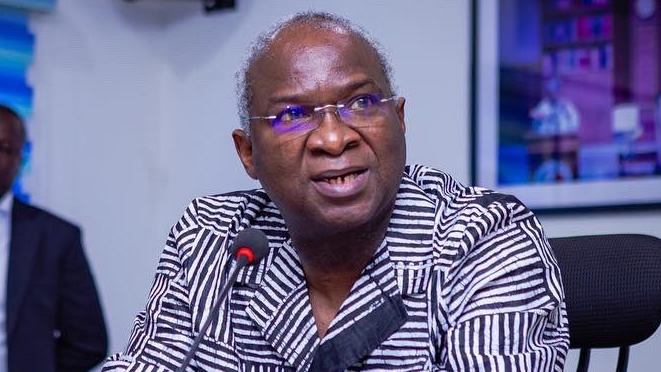
Former Minister of Works and ex-Lagos State governor, Babatunde Fashola, has called for a comprehensive reform of Nigeria’s football and sports development framework, describing the sector as an untapped economic engine capable of tackling youth unemployment and driving national growth.
Speaking at the public presentation of veteran sports journalist Mumini Alao’s autobiography on Friday at the Tayo Aderinokun Hall, University of Lagos, Fashola urged policymakers, private sector leaders, and civil society to “rethink the current football business model in Nigeria” and position sports as a strategic pillar of economic development.
“Why not sports, and why not now?” Fashola challenged. “Talent is now the most rewarded currency globally — and sports is at the forefront. It is time we stopped treating it as a hobby and started treating it as the billion-naira industry it truly is.”
Citing global examples, he noted that the English Premier League contributes over £3.36 billion to the UK’s GDP and supports 100,000 full-time jobs, while Saudi Arabia invests $5 billion annually in sports, achieving a 1% GDP boost. He also pointed to Nigerian and international athletes earning millions yearly, alongside the vast job ecosystem from physiotherapists and nutritionists to journalists and engineers that the sports industry supports.
“Nigeria continues to battle youth unemployment while ignoring one of the most obvious solutions sports,” he said. “This sector can absorb tens of thousands of our youth and give them meaningful careers.”
The event celebrated Alao’s over three-decade career in sports journalism, particularly through Complete Sports magazine, underscoring the wider opportunities in the sports value chain.
Fashola outlined a five-point reform strategy to reposition Nigerian sports:
- Integration into national development planning
- Manpower development
- Infrastructure and transport integration
- Security and safety at sporting events, including crowd management and emergency response training
- Governance, regulation, and legal framework, with a well-defined sports calendar backed by legislation to attract investment.
He stressed that delivering these reforms would require collaboration across education, law, media, engineering, and security sectors.