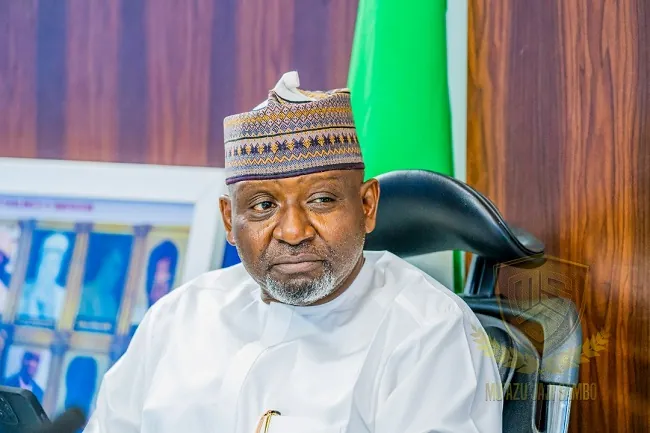
Former Minister of Transportation, Mu’azu Jaji Sambo, has warned that Nigeria faces a looming socioeconomic crisis unless it swiftly overhauls its education system to prioritize skills-based learning and youth employability.
Sambo issued the warning on Monday at the Impact Forum 2025 in Abuja, organized by the Uwais Maiwada Aid Foundation (UMAF). He described Nigeria’s soaring youth population and disconnect between formal education and practical skills as a “ticking socioeconomic time bomb.”
“Our economy grew by only 3.13% in the first quarter of this year. Yet, more than 10% of our youth are not in school, employment, or training,” he said. “This cannot continue.”
Sambo stressed the urgent need to revamp Nigeria’s educational framework, integrating academic knowledge with vocational skills and entrepreneurship.
“Our young people must find dignity and income in skills and craftsmanship, just as they do in certificates,” he asserted. “Our current institutions are not delivering this vision. That must change.”
He urged Nigeria to adopt best practices from countries like Germany, South Korea, and Singapore, where technical education is aligned with industry needs, thereby reducing unemployment.
Founder and Executive Director of UMAF, Uwaia Abdullahi Maiwada, also emphasized the need for practical education.
“We need a system that prepares students not just for jobs—but to become job creators,” he said, lamenting that financial constraints and weak infrastructure prevent many youths from accessing skill-based learning.
Also speaking at the forum, former Minister of State for Petroleum Resources, Timipre Sylva, linked rising insecurity and poverty to Nigeria’s failure to invest in technical education.
“The issues of insecurity, poverty, and ignorance are driving more children out of school,” Sylva noted. “This is not just a northern problem or a southern problem—it’s a Nigerian problem.”
The forum concluded with a unified call for urgent, collaborative action across government, the private sector, and civil society to reposition Nigeria’s education system toward functional skills development and youth empowerment, seen as critical to securing the nation’s future.