Ethiopia has formally accused neighboring Eritrea of preparing for war, in a stark warning that signals rising tensions between the Horn of Africa nations over access to the Red Sea and internal insurgency support.
In a letter dated October 2 and addressed to United Nations Secretary-General António Guterres, Ethiopian Foreign Minister Gedion Timothewos alleged that Eritrea is working in concert with the Tigray People’s Liberation Front (TPLF) to destabilize Ethiopia’s northern regions. The letter claims both parties are “funding, mobilising, and directing armed groups” in the Amhara region, where Ethiopian government forces are engaged in a protracted conflict with local insurgents.
Eritrean officials have not publicly responded to the accusations.
The latest allegations underscore a dramatic deterioration in relations that had only recently shown signs of improvement following decades of hostilities. Eritrea won independence from Ethiopia in 1993, taking with it the country’s access to the Red Sea — a long-standing geopolitical sore point for Addis Ababa. A subsequent border war from 1998 to 2000 resulted in tens of thousands of deaths and a diplomatic freeze that lasted nearly 20 years.
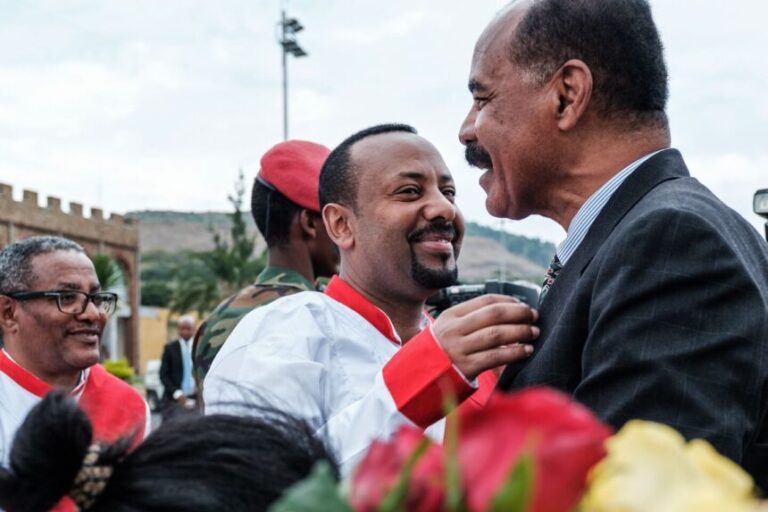
A 2018 peace agreement brokered by Ethiopian Prime Minister Abiy Ahmed, which ended the state of war between the two countries, earned him a Nobel Peace Prize and briefly restored diplomatic ties. However, recent developments suggest that underlying tensions never fully dissipated.
Ethiopia’s renewed assertions for strategic sea access, possibly through Eritrean territory, have raised alarm in Asmara, which views any such ambitions as a threat to its sovereignty.
In his letter to the UN, Timothewos expressed Ethiopia’s preference for peaceful negotiations to resolve the maritime dispute but warned that Eritrea’s alleged involvement in internal Ethiopian unrest risks igniting broader regional instability.
“This coordinated activity threatens not only Ethiopia’s internal stability but also the fragile security balance in the Horn of Africa,” he wrote.
The Amhara region, once a stronghold of government support, has become a focal point for unrest since Ethiopia’s civil conflict in Tigray began in 2020. Though a ceasefire was signed in 2022 between the federal government and the TPLF, the presence of Eritrean troops in Tigray during the conflict and the subsequent fallout have strained relations further.
The rising hostilities between Ethiopia and Eritrea come at a time when the Red Sea region is of increasing strategic importance amid global shipping routes and geopolitical rivalries. International observers fear that a renewed Ethiopia-Eritrea conflict could exacerbate existing humanitarian crises and disrupt fragile post-war recovery efforts in northern Ethiopia.
The United Nations has yet to publicly comment on the contents of Ethiopia’s letter, but diplomats suggest the matter could soon be raised at the Security Council, given its implications for regional peace and security.
As tensions mount, analysts warn that Abiy’s regional ambitions and Eritrea’s hardened stance could lead to renewed conflict unless both sides return to the negotiating table.