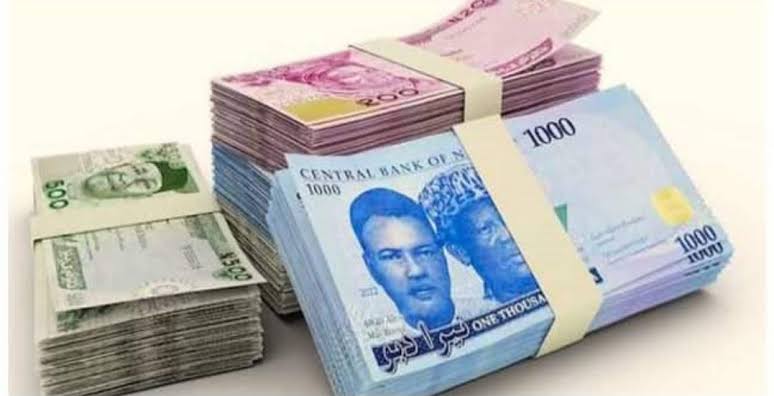
As a result, the country has spent N3.83 trillion on debt service payments in the last 15 months, according to statistics collected from the Debt Management Office.
While N2.93 trillion was spent on debt servicing payments in 2021, N896.56 billion was spent in the first quarter of 2022.
Meanwhile, between October and December 2021, Nigeria paid N310.5 billion on domestic debt servicing and $286.35 million (N118.9 billion) on external debt servicing, for a total of N429.4 billion.
However, between January and March 2022, Nigeria spent N668.69bn on domestic debt servicing, while it spent $548.79m (N227.87bn) on external debt servicing, giving a total of N896.56bn.
The official exchange rate of the Central Bank of Nigeria, which showed $1 =N415.22 as of June 15, 2022, was used for the external debt servicing.
This indicates the amount the country spent on debt servicing rose by 109 percent from N429bn in December 2021 to N896bn in March 2022.
Nigeria’s debt position worsened in the first quarter of this year as the country’s debt stock rose by N2.04trn to hit N41.60tn from the N39.56tn recorded as of December 2021.
Between January and March 2021, Nigeria had spent N612.71bn on domestic debt servicing, while it spent $1bn (N415.22bn) on external debt servicing, giving a total of N1.03tn.
From April to June 2021, the country spent N322.7bn on domestic debt servicing and $299m (N124.15bn) on external debt servicing, showing a total of N446.85bn.
From July to September 2021, Nigeria spent N808.49bn on domestic debt servicing and $520.78m (N216.24bn) on external debt servicing, giving a total of N1.02tn.
Speaking at the launch of the World Bank’s Nigeria Development Update titled ‘The urgency for business unusual,’ held recently in Abuja, the Minister of Finance, Budget and National Planning, Zainab Ahmed, had expressed concern that the fuel subsidy regime was hurting Nigeria’s ability to service its debts.
She said, “Already we have borrowing increasing significantly and we are struggling with being able to service debt because even though revenue is increasing, the expenditure has been increasing at a much higher rate so it is a very difficult situation.”
The International Monetary Fund has cautioned that if necessary steps to boost income production are not implemented, debt payment might consume 100% of the Federal Government’s revenue by 2026.
Ari Aisen, the IMF’s Resident Representative in Nigeria, announced while presenting the Sub-Saharan Africa Regional Economic Outlook report in Abuja.
According to an IMF official, interest payments on debts may wipe out the country’s total profits over the following four years, based on a macro-fiscal stress test done on Nigeria.
Aisen said, “The biggest critical aspect for Nigeria is that we have done a macro-fiscal stress test, and what you observe is the interest payments as a share of revenue and as you see us in terms of the baseline from the federal government of Nigeria, the revenue almost 100 percent is projected by 2026 to be taken by debt service.
“So, the fiscal space or the amount of revenues that will be needed, and this without considering any shock is that most of the revenues of the federal government are now, in fact, 89 percent and it will continue if nothing is done to be taken by debt service.”