Chinese manufacturers are slashing wages, reducing working hours, and sending employees on unpaid leave as they grapple with U.S. tariffs, industrial overcapacity, and intensifying competition for shrinking markets.
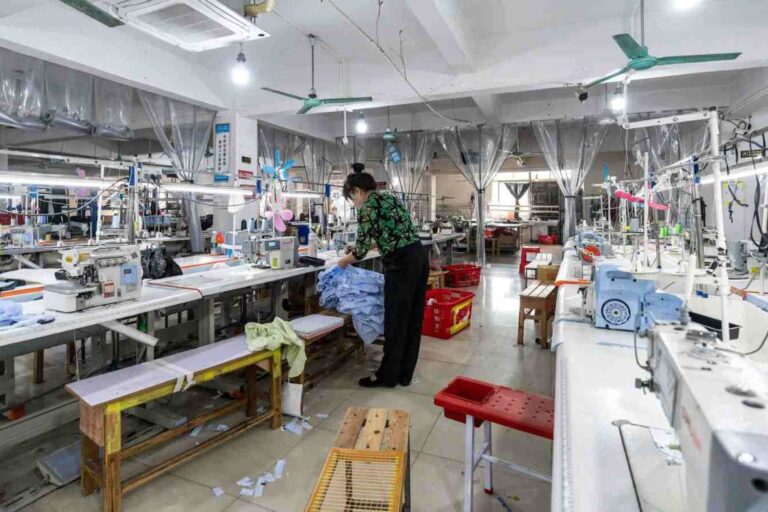
In Foshan, southern China, kitchen cabinet maker Cartia Global Manufacturing is cutting wage costs by 30% to fend off rivals. Owner Mike Chai has already halved his workforce since the pandemic and now relies on shorter shifts and unpaid leave to stay afloat.
“We’re in survival mode,” said Chai, who fears losing long-time customers in Australia to Chinese competitors priced out of the U.S. market by tariffs. “You don’t want our factory to go broke. Let’s do it together.”
While China’s official jobless rate remains near 5%, economists warn that underemployment is worsening. Many workers avoid outright layoffs but face reduced hours and pay cuts. Natixis chief Asia-Pacific economist Alicia Garcia-Herrero called it “a spiral” of lower prices, lower costs, and lower wages, leaving Chinese workers “the main losers” in the trade war.
Chai’s factory is running at half capacity after losing two major Australian clients to cheaper rivals. To compete, he plans a 10% price cut, meaning overtime—once a third of workers’ income—will drop from 28 days a month to about 10.
Other factory owners are turning to temporary contracts to cut pension and insurance costs. Dave Fong, who co-owns three southern China factories, laid off 30 full-time staff at one plant and rehired some as temporary workers to handle fluctuating orders.
Hourly wages are also falling. In Wuhan, recruiter Chen Chuyan says rates have slipped from 16 yuan to 14 yuan. Garment worker Alan Zhang in Guangzhou says he now earns less than half his 2021 daily pay and worked only 14 days in July—barely enough to cover his child’s school fees.
Economists warn that falling manufacturing wages could deepen deflationary pressures across the economy, particularly in low-skill industries like textiles, furniture, and basic electronics.
In Shenzhen’s Longhua job market, competition is fierce. Jobseekers complain of advertised rates being cut after hiring, along with heavy deductions for housing and fees. Some, like 46-year-old Huang from Yunnan, have spent days searching without success, skipping interviews that require upfront payments just to save money for meals.
Despite a temporary tariff truce between Washington and Beijing, manufacturers say the pressures are structural—and survival now depends on finding markets where they can still compete on price.