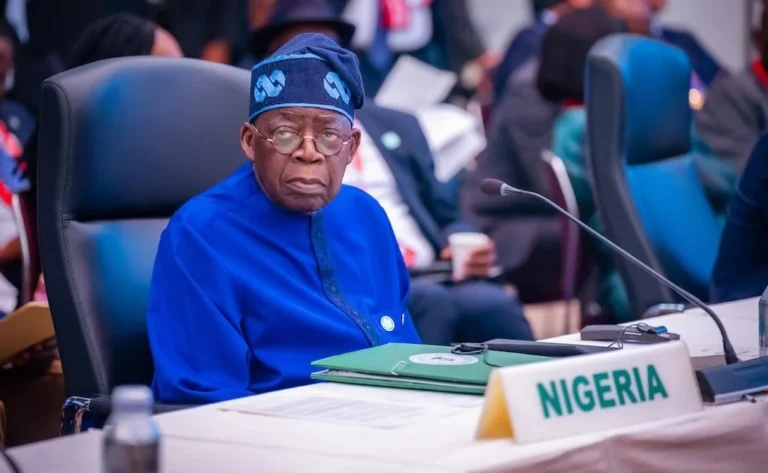
Uncertainty is mounting around President Bola Tinubu’s ambassadorial nominees as diplomatic sources reveal that several host countries may hesitate to grant approval due to concerns over the short remaining tenure of the current administration.
Senior officials in the Presidency and Nigeria’s foreign service confirmed that the Ministry of Foreign Affairs is encountering difficulties in obtaining agreement—the mandatory consent from receiving states—for some of the nominees. The concern, they explained, is that many countries prefer ambassadors to have at least one to two years left in the tenure of the appointing government.
With Nigeria’s next presidential election slated for February 2027 and President Tinubu’s first term ending in May of that year, officials fear that some host countries may delay or decline acceptance, citing limited time for meaningful diplomatic engagement.
A senior foreign service official, who requested anonymity, explained: “The problem we have, which we are trying at the moment to see what we can do about, is that most countries, like India, will tell you that if an ambassador has less than one year or two, they may have issues. Usually, one year counts to the end of any current administration.
“So, that is where there might be a challenge. By the time they get the agrément, some of these ambassadors will have just a few months left. We are trying to see how we can deal with that.”
Typically, career diplomats serve tours of about three years per posting. Under Article 4 of the 1961 Vienna Convention on Diplomatic Relations, no ambassador can be accredited without the consent of the receiving country, which is also not required to explain a refusal.
The current situation follows a sweeping foreign policy review in September 2023, just four months into Tinubu’s administration, when Nigeria recalled career and non-career ambassadors from 109 missions—76 embassies, 22 high commissions and 11 consulates. The move, aimed at achieving “world-class efficiency and quality,” left many missions without substantive heads for more than two years. Only Nigeria’s Permanent Representatives to the United Nations in New York and Geneva, as well as the Ambassador to Niger Republic, were exempted due to pressing diplomatic considerations.
It was not until November 2025—over 26 months later—that the President sent ambassadorial nominations to the Senate. The first batch of three nominees—Ayodele Oke, Amin Dalhatu and Colonel Lateef Are (retd.)—was forwarded on November 26, 2025, followed by another list of 32 names on November 29, comprising 17 non-career and 15 career officers. In total, at least 67 nominees have been named so far.
On January 22, 2026, Tinubu confirmed key postings, naming Oke as ambassador-designate to France, Are as ambassador-designate to the United States, and Dalhatu as high commissioner-designate to the United Kingdom. Other nominees are expected to be posted to countries including China, India, the UAE, Qatar and South Africa, as well as multilateral bodies such as the United Nations, UNESCO and the African Union.
However, officials warn that delays in nominations and confirmations, combined with lengthy diplomatic procedures, may leave some ambassadors with limited time to secure acceptance. After Senate screening, nominees must attend a mandatory retreat, receive detailed post reports and then await agrément, a process that can stretch for months.
A foreign service source noted that some envoys might not resume duties until August 2026, leaving less than nine months before the general elections. “Some people may not go before August because some countries will take their time to do background checks,” the official said. “When you send the name, sometimes they will respond, ‘Send someone else.’ … Or they may just ignore you for six months.”
A Presidency official confirmed that all processes are being coordinated by the Ministry of Foreign Affairs. “The President has given them approval to send names to the countries. It is when those countries accept that we will release a statement saying which country each person is going to,” the source said, adding that announcements are deliberately withheld until agrément is secured.
Despite efforts to fast-track approvals, Nigeria’s foreign missions have remained without ambassadors since September 2023, prompting concerns about diplomatic effectiveness and possible international isolation. Foreign Affairs Minister Yusuf Tuggar has previously blamed funding constraints, exchange rate pressures and the administration’s focus on economic reforms for the delay.
Former ambassador to Singapore, Ogbole Amedu-Ode, said host countries are simply acting out of caution. “The underlying word here is pragmatism,” he said, noting that elections can be unpredictable. “So, why receive letters of credence from a principal envoy from a President who has just one year and some months remaining for his first term in office?”
He described the delay in nominating ambassadors as a misstep, stressing that agrément is usually sought quietly before public announcements to avoid embarrassment.
Nigeria’s former envoy to Algeria, Mohammed Mabdul, however, believes outright rejection is unlikely from friendly nations. While career diplomats may face fewer obstacles, he warned that political appointees could struggle to make impact due to the looming election cycle, even if they are eventually accredited.
As diplomatic clearances drag on, questions persist over how quickly Nigeria can restore full leadership across its foreign missions before another election cycle begins.