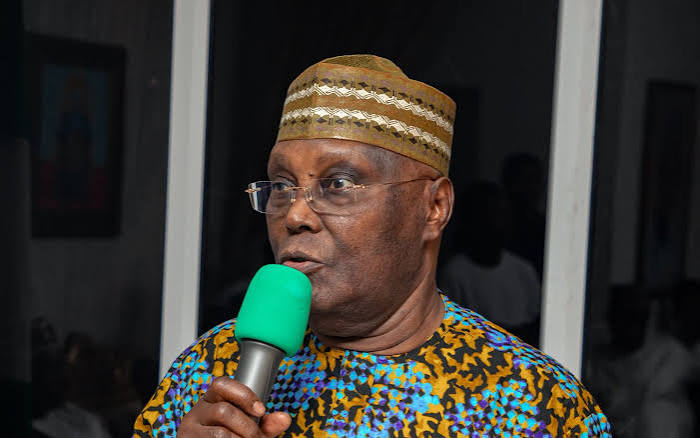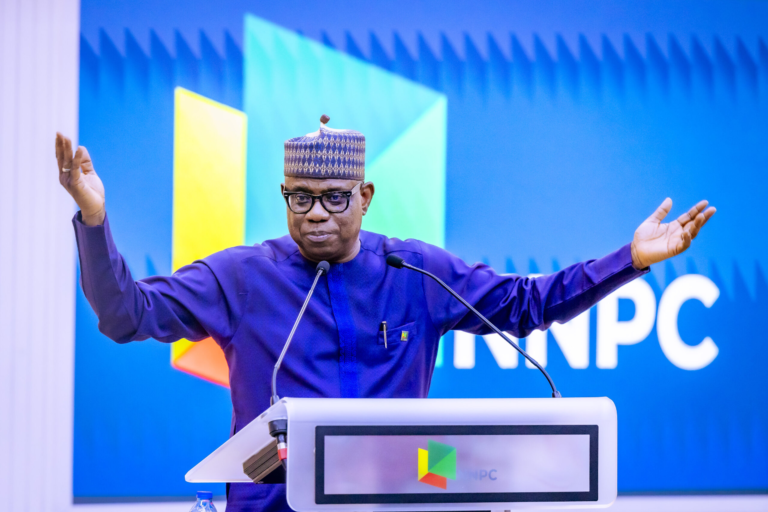
Bayo Ojulari, chief executive officer (CEO) of Nigerian National Petroleum Company (NNPC) Limited, has said Nigeria’s state-owned refineries failed to operate effectively because attention was placed on financing and engineering, procurement, and construction (EPC) contracts rather than on running the facilities.
Ojulari spoke during the just-concluded Nigerian International Energy Summit (NIES), where he faulted the long-standing approach to refinery development in the country.
“The reason our refineries have not worked is that we are focused on the first two: EPC and financing. Anybody who wants to do the financing will get value for it,” he said.
He explained that financiers and EPC contractors typically complete their roles, receive payment, and exit, leaving NNPC with the responsibility of operating the refineries for decades without adequate preparation.
“The person financing is not financing you for free, right? They are financing you for margins and profitability. The EPC contractors do their work, get paid, and move on. You, as NNPC, are left for the next 20 to 40 years to run those refineries. And we’ve never really focused on that,” Ojulari said.
He noted that while there have been extensive discussions around operations and maintenance (O&M), effective global practice requires a strong operational excellence team to manage such functions.
“Then again, O&M is another contract. So you end up with financing EPC, O&M, all of them taking money from the system without any skin in the game,” he said.
“There’s no way you can sustain any business like that. It’s very clear. The system was designed for taking, not to put anything in,” Ojulari added.
The NNPC CEO said the current leadership has decided to focus on “that part that has not been there,” drawing from experience in managing large-scale energy projects.
“For those of us who spend years building big, multi-billion dollar facilities for the IOCs, we know these principles. The day you start a project, you appoint an ‘operational assurance person’, who will be part of that project from the get-go and ensure that whatever you deliver can be operated,” he said.
Ojulari also recounted his experience while working at Shell, where he served on the commissioning team for Qatargas and was involved in operations readiness from the early project stages.
“One of the privileges I had working in Shell was that I was on the commissioning team for the Qatargas. From the beginning, during the project phase, I was in the operations readiness team,” he said.
“Far ahead of when the gas plants were to be constructed, I was there twice. We went to audit operational readiness for things that were about to be constructed. The second audit was when the construction was about 90 percent completed.”
He said the audits exposed operability challenges that needed to be addressed through training, resources, and capability development.
“Then you put in the capability, the training, the resources to be able to operate. Remember, for most mega-projects, you spend maybe two to three years thinking about the project, framing it, if you are very efficient,” Ojulari said.
“You spend maybe three to five years constructing it. You run it for about 25 to 50 years. So where should your focus be?”
Ojulari added that NNPC had previously handled these critical operational issues with kid gloves. He also disclosed that the company is currently discussing a potential partnership with a Chinese firm over one of the state-owned refineries.