The United States has stepped up its military operations in the southern Caribbean, with new deployments and increasingly aggressive rhetoric from President Donald Trump and senior defense officials aimed at Venezuelan-linked criminal networks.
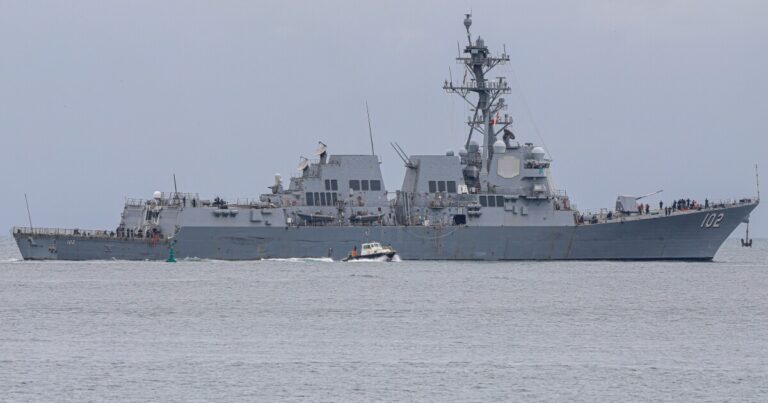
On Saturday, five F-35 stealth fighter jets arrived in Puerto Rico as part of a broader deployment of 10 aircraft, approved by the Trump administration. The arrival of the jets coincides with the presence of at least seven U.S. Navy warships and one nuclear-powered submarine already patrolling the region.
The buildup follows a controversial series of strikes on vessels allegedly tied to drug trafficking operations, raising legal and diplomatic questions as tensions spike with the government of Venezuelan President Nicolás Maduro.
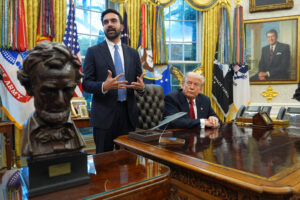
Speaking to reporters this week, President Trump hinted at the possibility of expanding operations beyond maritime targets.
“When they come by land, we’re going to be stopping them the same way we stopped the boats,” Trump said. “But maybe by talking about it a little bit, it won’t happen.”
His comments come amid growing scrutiny over the legality of recent U.S. strikes. In one incident on September 2, U.S. forces reportedly destroyed a boat linked to Venezuela’s notorious Tren de Aragua gang, killing 11 people, according to Washington. The Pentagon has not disclosed the volume of narcotics seized, the specific weapons used, or the operational details of the strike.
Hours before Trump’s remarks, Defense Secretary Pete Hegseth reaffirmed the administration’s hardline posture in a post on X (formerly Twitter):
“We will track them, kill them, and dismantle their networks throughout our hemisphere at the times and places of our choosing.”
President Maduro has condemned the uptick in U.S. activity as “aggression” and accused Washington of using drug trafficking allegations as a pretext for regime change. Communication channels between the two governments have reportedly gone silent in recent weeks.
Last month, the U.S. doubled its reward for information leading to Maduro’s arrest to $50 million, citing alleged ties to organized crime and transnational narcotics smuggling.
Maduro’s government denies any link to the Tren de Aragua and disputes U.S. claims about the September 2 operation. Venezuelan officials have insisted that none of those killed in the strike were gang members and have accused Washington of fabricating evidence. One Venezuelan official even suggested that a video of the attack shared by Trump was artificially generated, though a Reuters analysis found no clear signs of digital manipulation.
The administration’s decision to destroy suspected narco-vessels instead of seizing them has drawn concern from lawmakers and legal scholars, who say it raises constitutional red flags.
Democratic Senator Adam Schiff said on Monday he is drafting a resolution under the War Powers Act that would require a congressional vote to authorize any further U.S. military action against non-state actors in the region.
“Congress must reassert its constitutional authority over matters of war and peace,” Schiff said in a statement.
Meanwhile, President Trump has proposed renaming the U.S. Department of Defense as the “Department of War,” pending congressional approval. The move would also officially change Secretary Hegseth’s title to “Secretary of War,” a symbolic shift that has already sparked debate in defense and diplomatic circles.
The U.S. military escalation in the Caribbean marks a sharp turn in Washington’s approach to counter-narcotics enforcement and signals growing willingness to use lethal force against suspected traffickers. Analysts warn that the strategy could provoke unintended consequences in a region already fraught with instability.
Venezuela says it has deployed tens of thousands of troops domestically to fight drug trafficking. But relations with Washington continue to deteriorate, raising fears of miscalculation or broader conflict.
As stealth fighters touch down and warships fan across the Caribbean Sea, the Trump administration’s high-risk strategy signals a new chapter in the decades-long struggle over influence, crime, and sovereignty in the Western Hemisphere.