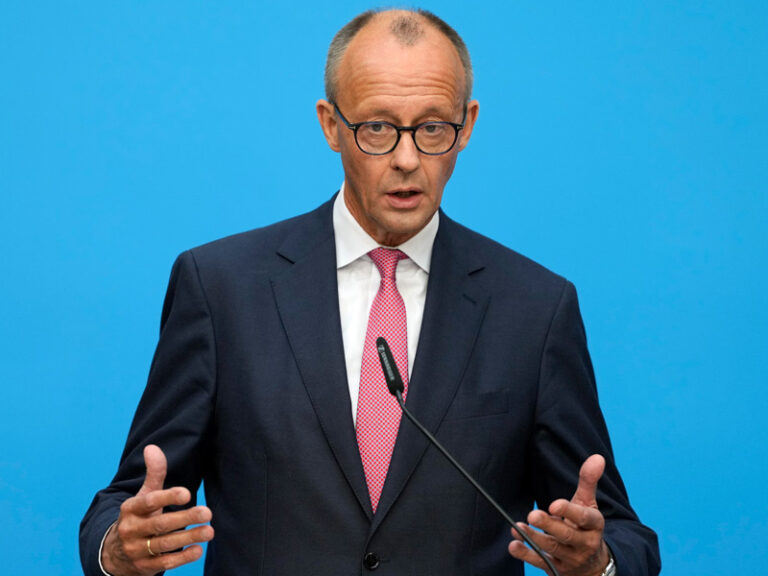
Germany is set to launch a massive wave of defence procurement deals worth tens of billions of euros, as Chancellor Friedrich Merz advances his vision of transforming the country’s military into Europe’s dominant conventional force, according to sources familiar with the plans.
The planned purchases include 20 Eurofighter jets, up to 3,000 Boxer armoured vehicles, and as many as 3,500 Patria infantry fighting vehicles, in what would amount to one of the largest defence overhauls in Germany’s post-war history.
The sweeping initiative reflects Berlin’s strategic shift toward greater military self-reliance and a reduced dependence on the United States. Chancellor Merz has made military revitalisation a key pillar of his leadership, vowing to reverse years of defence underinvestment.
Earlier this year, Merz secured parliamentary approval to lift constitutional debt limits specifically for defence, enabling his government to dramatically boost spending. Germany’s defence budget is projected to rise from €63 billion in 2025 to €83 billion ($95.8 billion) by 2026 under the new fiscal framework.
The Eurofighter jet order is expected to cost between €4 billion and €5 billion, while the Boxer vehicles—developed by KNDS and Rheinmetall—are estimated at €10 billion. The Finnish-designed Patria vehicles are projected to add another €7 billion to the overall cost, with deliveries scheduled to take place over the next decade.
In addition to ground and air platforms, the German Defence Ministry is also moving ahead with plans to acquire IRIS-T air defence systems and hundreds of SkyRanger drone defence units. Financial terms for these systems are still being finalised, but they reflect Germany’s broader goal of enhancing its defensive capabilities across air, land, and cyber domains.
Merz has committed to meeting NATO’s new defence spending target of 3.5% of GDP by 2029—ahead of most alliance members—underscoring Berlin’s determination to play a more assertive role in European and transatlantic security.
Germany’s defence buildup comes amid growing anxiety over European military preparedness, particularly after Russia’s full-scale invasion of Ukraine in 2022. That conflict exposed critical gaps in Germany’s defence readiness, prompting the army’s former chief to warn that the Bundeswehr was “more or less empty-handed.”
The new procurement plan is widely seen as a direct response to those concerns and a signal of Germany’s evolving strategic posture.
While the Defence Ministry has yet to publicly confirm all spending figures, alternative estimates reported by outlets like Bloomberg support the scale of the planned expansion. Analysts say the initiative marks a historic turning point for a country that once prioritised restraint in military affairs.
With these investments, Germany is positioning itself not just as a key NATO contributor, but as a central pillar of European defence in a rapidly shifting global security environment.