Florida Governor Ron DeSantis announced Friday that deportation flights have officially begun from the state’s highly controversial immigration detention center deep in the Everglades—nicknamed “Alligator Alcatraz”—with plans to escalate removals significantly in the coming weeks.
Speaking near the remote facility, located roughly 50 miles west of Miami, DeSantis said that around 100 detainees had already been deported, and that the pace would accelerate. “You’re going to see the numbers go up dramatically,” he stated.
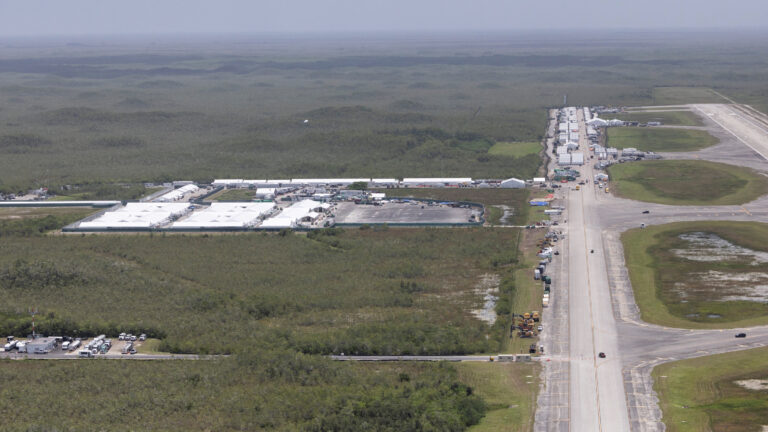
While officials declined to reveal the destinations of the initial deportation flights, they confirmed that two to three flights have already departed. The facility currently holds about 2,000 detainees, but Florida Emergency Management Director Kevin Guthrie said it could accommodate twice that number if expanded.
Constructed rapidly across a 10-square-mile swath of alligator- and python-infested wetlands, the detention center includes more than 200 surveillance cameras, five miles of barbed-wire fencing, and its own runway to support expedited deportations.
DeSantis urged the U.S. Department of Justice to assign an immigration judge on-site to accelerate case processing. “This was never intended to be a holding facility,” he said. “It’s a deportation hub—built to move people out faster.”
The project has drawn intense criticism from environmental advocates and human rights groups. Lawsuits have been filed to halt further development, citing potential ecological damage and concerns over conditions for detainees. Activists are also demanding transparency around contracts and communications between federal and state officials.
Despite the backlash, the Biden administration has reportedly endorsed the location’s extreme remoteness as a deterrent to illegal immigration. Meanwhile, former President Donald Trump, whose administration originally proposed the facility, has publicly supported expanding detention infrastructure, including reviving Alcatraz and utilizing offshore and foreign sites such as Guantánamo Bay and a prison in El Salvador.
Governor DeSantis, undeterred by mounting opposition, has continued to frame the Everglades site as a critical pillar of his immigration crackdown, closely aligned with Trump-era enforcement priorities.