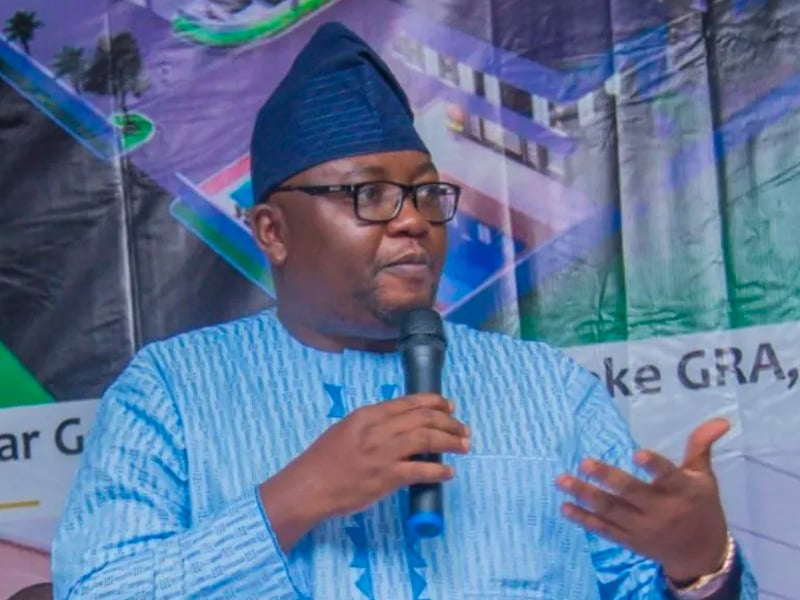
Former Vice President Atiku Abubakar has declared that the Nigerian National Petroleum Company Limited’s (NNPCL) recent admission of losses at the Port Harcourt Refinery proves his long-standing advocacy for privatising Nigeria’s state-owned refineries.
Atiku made the remarks in a statement shared via his X handle yesterday, reacting to comments from NNPCL indicating that the $1.5 billion spent on rehabilitating the Port Harcourt facility has not made it profitable.
NNPCL Group Chief Executive Officer, Bayo Ojulari, disclosed on Wednesday that the state-owned refineries were operating at a “monumental loss,” prompting his leadership team to halt operations to prevent further value erosion.
“On the refineries, Nigerians were angry. A lot of money has been spent, and expectations were very high. So we were under extreme pressure, extreme pressure,” Ojulari said. “The first thing that became clear, and I want to say this very clearly, is that we were running at a monumental loss to Nigeria. We were just wasting money. We were spending a lot of money on operations, a lot of money on contractors. But when you look at the net, we were just leaking away value,” he added.
Reacting, Atiku said the admission, though belated, confirmed that continued public funding of moribund refineries is economically unjustifiable.
“After gulping $1.5bn, the Nigerian National Petroleum Company Limited has now admitted that reopening the Port Harcourt Refinery is a waste of scarce resources. This belated admission validates my long-held position that Nigeria’s refineries should be privatised,” Atiku said.
He further criticised the payment of billions of naira in salaries to facilities that produce no petrol, stressing that such spending does not serve the national interest.
“For years, I advanced this patriotic position and was vilified and accused of plotting to sell public assets to ‘friends.’ Today, the facts have caught up with the rhetoric,” Atiku added.
The former vice president argued that decades of turnaround maintenance had consumed billions of dollars without results, exposing weaknesses in technical expertise, financial discipline, and refinery capacity. He also noted that the latest rehabilitation effort was driven more by political pressure than by sound economic reasoning.
“Nigeria would have been better served by selling the refineries pre-rehabilitation to avoid ballooning debt and the steady depreciation of what have effectively become liabilities,” Atiku stated, emphasising that any proposed refinery arrangement, including those involving foreign partners, should be reconsidered.